People are naturally social by design
We are literally built to connect with each other. When we don’t. it’s not because we don’t want to, its more that we can’t.
Barriers are created intentionally or unintentionally that serve to separate and segment.
Like the agile movement in 2001, organizational social design arises from an unconscious dissatisfaction – Not with code but because of code. Techno culture is slowly isolating us while it simultaneously commandeers the very human ideas of community, collaboration and connection.
Media Naturalness theory teaches us that physical presence is the pinnacle of human connection. And although virtual and asynchronous can bring versions of us and our ideas together, the full human to human experience is unrealized, understanding and trust can never fully form. We can be productive but not personal. Hybrid & remote work have amplified social distance – physically and relationally. And yet organizational agility is no longer optional; responsiveness depends on social learning and informal networks.
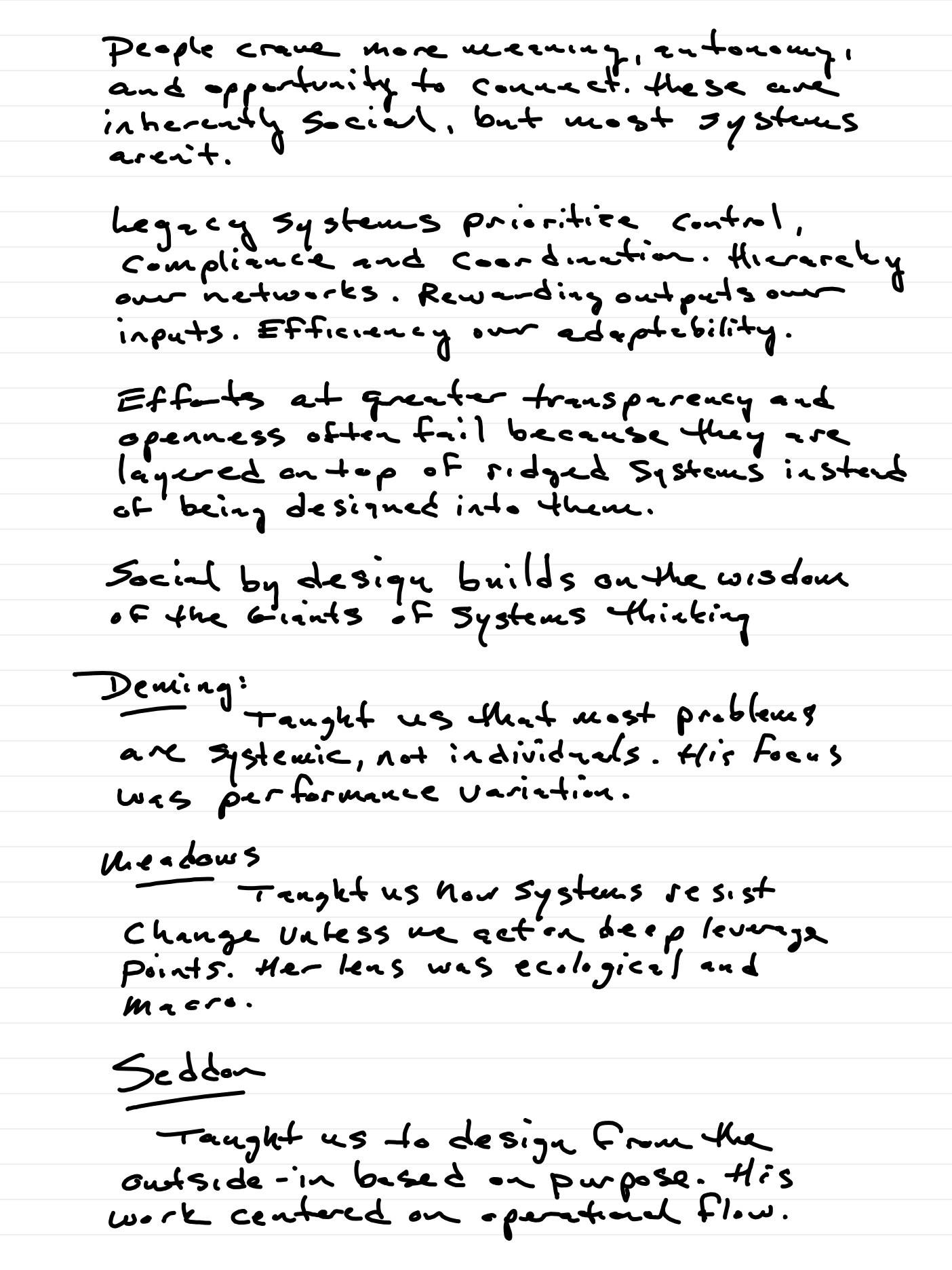
People crave more meaning, autonomy, and opportunity to connect. These are inherently social, but most systems aren’t.
Legacy systems prioritize control, compliance and coordination. Hierarchy our networks. Rewarding outputs or inputs. Efficiency over adaptability.
Efforts at greater transparency and openness often fail because they are layered on top of ridged systems instead of being designed into them.
Social by design builds on the wisdom of the Giants of systems thinking
Deming:
Taught us that most problems are systemic, not individuals. His focus was performance variation.
Meadows:
Taught us how systems resist change unless we act on deep leverage points. He- lens was ecological and Macro.
Seddon:
Taught us to design from the outside -in based on purpose. His work centered on operational flow.
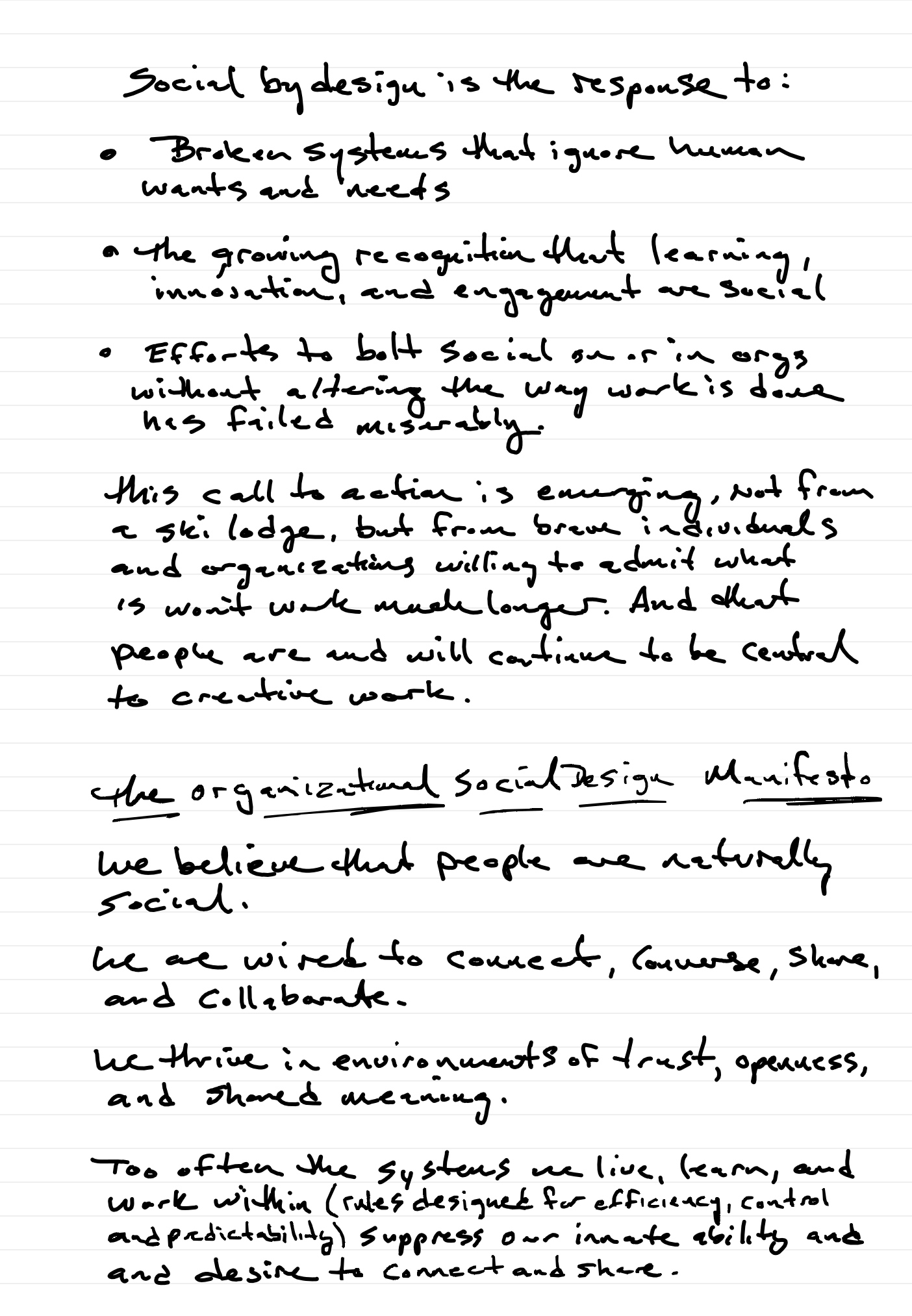
Social by design is the response to: Broken systems that ignore human wants and needs, the growing recognition that learning, innovation, and engagement are social, Efforts to bolt social on or in orgs without altering the way work is done has failed miserably.
This call to action is emerging, not from a ski lodge, but from brave individuals and organizations willing to admit what ‘s won’t work much longer. And that people are and will continue to be central to creative work.
The Organizational Social Design Manifesto
- We believe that people are naturally social.
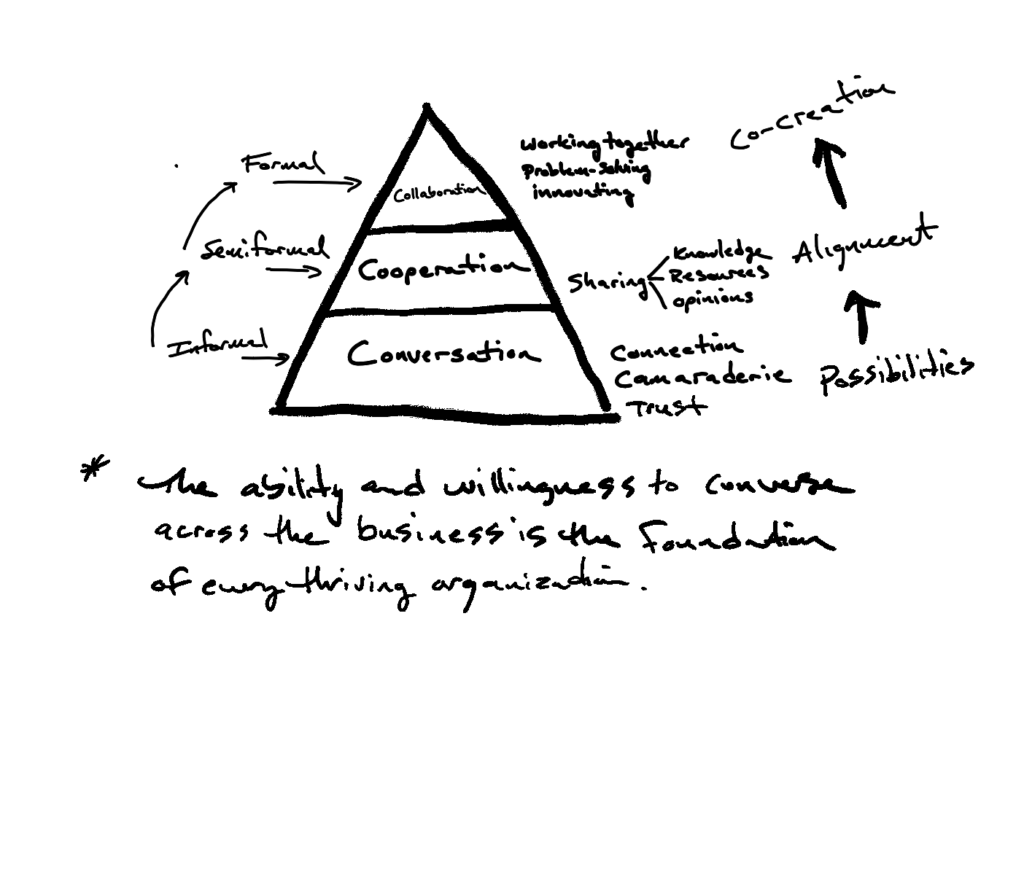
- We are wired to connect, Converse, Share, and collaborate.
- We thrive in environments of trust, openness, and shared meaning.
- Too often the systems we live, learn, and work within (designed for efficiency, control, and predictability) suppress our innate ability and desire.
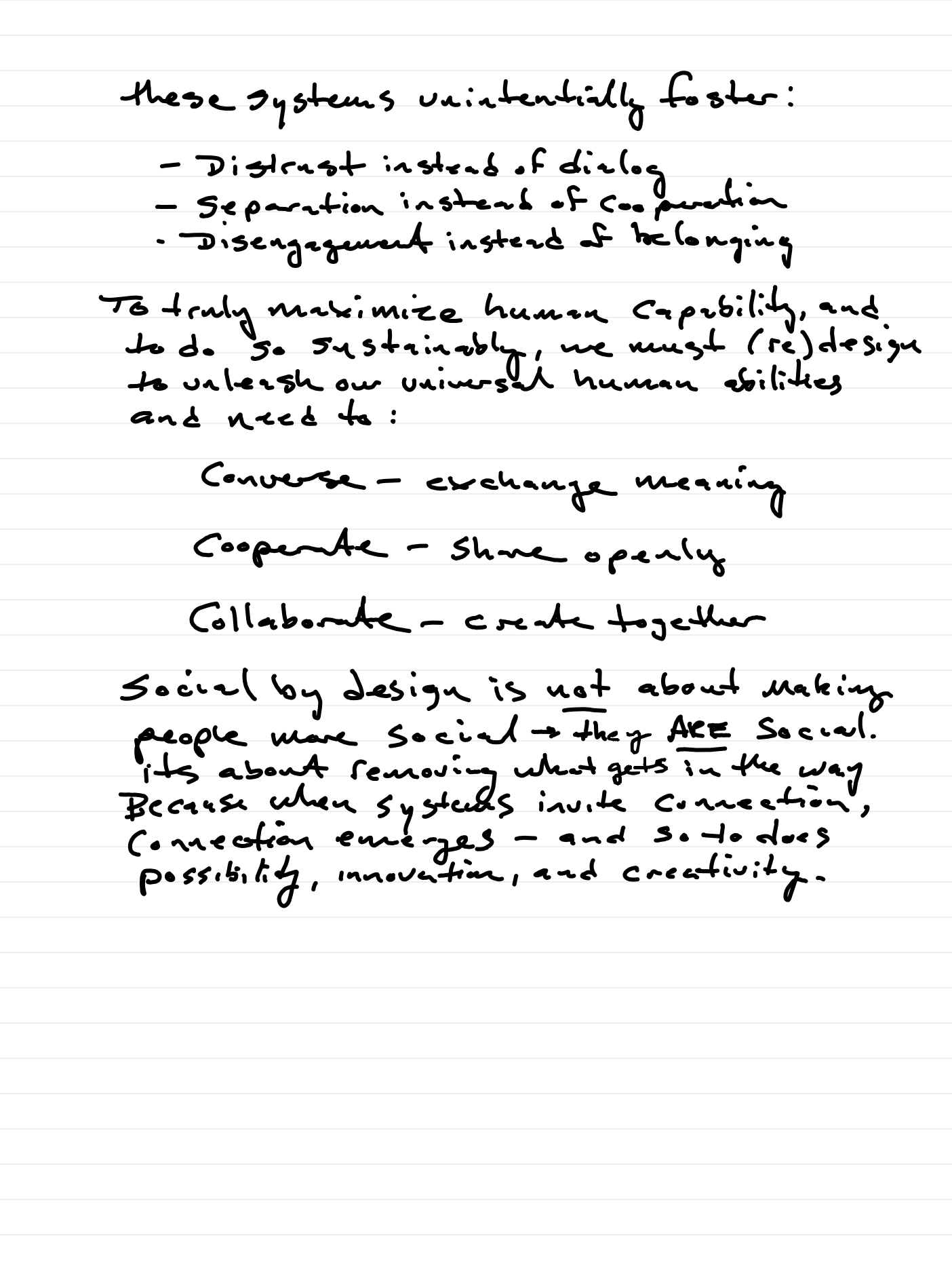
- these systems unintentionally foster:
Distrust instead of dialog
Separation instead of cooperation
Disengagement instead of belonging
- To truly maximize human capability, and to do so sustainably, we must (re) design to unleash our universal human abilities and need to:
Converse- exchange meaning
Cooperate – share openly
Collaborate- create together
Social by design is not about making people more social → they ARE Social. It’s about removing what gets in the way. Because when systems invite connection, connection emerges – and so too does possibility, innovation, and creativity.
Guiding principles
1. People are social by nature. Systems must stop resisting what is natural
2. Real knowledge exists in conversation not individuals
3. Conversation is the root behavior of all social connection. No dialog, no cooperation. No Cooperation, no collaboration
meaningful, productive conversation, cooperation, and collaboration hinge on lived experience and emotion
4. Social activity requires a shared object or purpose. without this connection dissipates
5. Design shapes behavior. If you want different outcomes, change the environment not the people
6. Remove what inhibits. most social potential is unlocked by subtraction not addition.
7. Openness and transparency build trust. Invite observation and Contribution.
Every Act of Design is A Decision about how People will Relate.
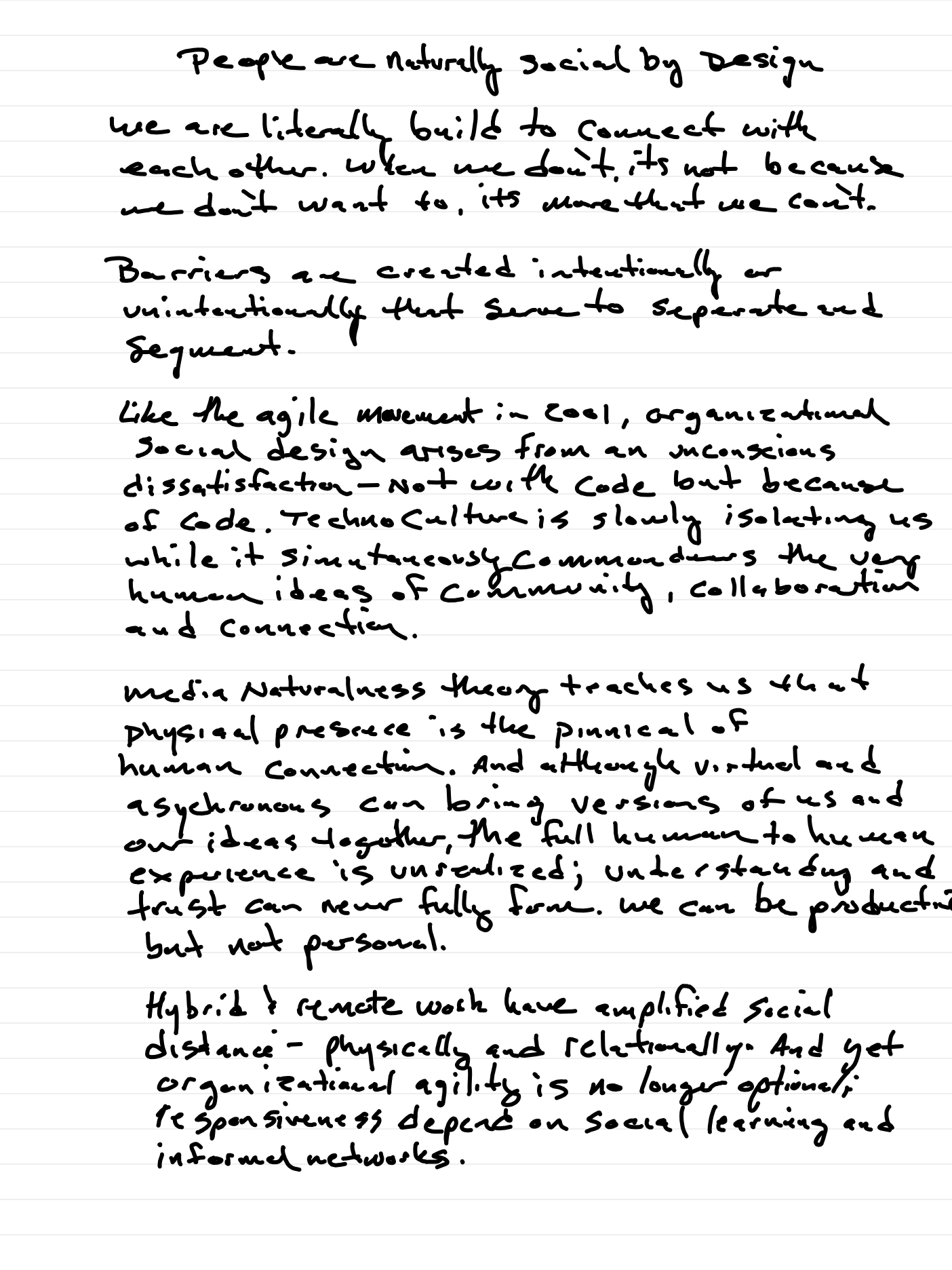

People are naturally social by design
We are literally built to connect with each other. When we don’t. it’s not because we don’t want to, its more that we can’t.
Barriers are created intentionally or unintentionally that serve to separate and segment.
Like the agile movement in 2001, organizational social design arises from an unconscious dissatisfaction – Not with code but because of code. Techno culture is slowly isolating us while it simultaneously commandeers the very human ideas of community, collaboration and connection.
Media Naturalness theory teaches us that physical presence is the pinnacle of human connection. And although virtual and asynchronous can bring versions of us and our ideas together, the full human to human experience is unrealized, understanding and trust can never fully form. We can be productive but not personal. Hybrid & remote work have amplified social distance – physically and relationally. And yet organizational agility is no longer optional; responsiveness depends on social learning and informal networks.
People crave more meaning, autonomy, and opportunity to connect. These are inherently social, but most systems aren’t.
Legacy systems prioritize control, compliance and coordination. Hierarchy our networks. Rewarding outputs or inputs. Efficiency over adaptability.
Efforts at greater transparency and openness often fail because they are layered on top of ridged systems instead of being designed into them.
Social by design builds on the wisdom of the Giants of systems thinking
Deming:
Taught us that most problems are systemic, not individuals. His focus was performance variation.
Meadows:
Taught us how systems resist change unless we act on deep leverage points. He- lens was ecological and Macro.
Seddon:
Taught us to design from the outside -in based on purpose. His work centered on operational flow.
Social by design is the response to: Broken systems that ignore human wants and needs, the growing recognition that learning, innovation, and engagement are social, Efforts to bolt social on or in orgs without altering the way work is done has failed miserably.
This call to action is emerging, not from a ski lodge, but from brave individuals and organizations willing to admit what ‘s won’t work much longer. And that people are and will continue to be central to creative work.
The Organizational Social Design Manifesto
- We believe that people are naturally social.
- We are wired to connect, Converse, Share, and collaborate.
- We thrive in environments of trust, openness, and shared meaning.
- Too often the systems we live, learn, and work within (designed for efficiency, control, and predictability) suppress our innate ability and desire.
- these systems unintentionally foster:
Distrust instead of dialog
Separation instead of cooperation
Disengagement instead of belonging
- To truly maximize human capability, and to do so sustainably, we must (re) design to unleash our universal human abilities and need to:
Converse- exchange meaning
Cooperate – share openly
Collaborate- create together
Social by design is not about making people more social → they ARE Social. It’s about removing what gets in the way. Because when systems invite connection, connection emerges – and so too does possibility, innovation, and creativity.
Guiding principles
1. People are social by nature. Systems must stop resisting what is natural
2. Real knowledge exists in conversation not individuals
3. Conversation is the root behavior of all social connection. No dialog, no cooperation. No Cooperation, no collaboration
meaningful, productive conversation, cooperation, and collaboration hinge on lived experience and emotion
4. Social activity requires a shared object or purpose. without this connection dissipates
5. Design shapes behavior. If you want different outcomes, change the environment not the people
6. Remove what inhibits. most social potential is unlocked by subtraction not addition.
7. Openness and transparency build trust. Invite observation and Contribution.
Every Act of Design is A Decision about how People will Relate.